
A Reflection on Rekindling the Hearth Marriage Retreat
- Aaron Debusschere
- Feb 26
- 5 min read
Updated: Mar 1

“This is a great mystery” (Eph 5:32). With these words, St. Paul describes the sacrament of
marriage. A mystery—not like the popular literary and film genre—is something we can always come to know more broadly and more deeply; a mystery is inexhaustible. My recent experience at the marriage retreat organised by the Gregory the Great Institute confirmed Paul’s position; marriage is a great mystery.
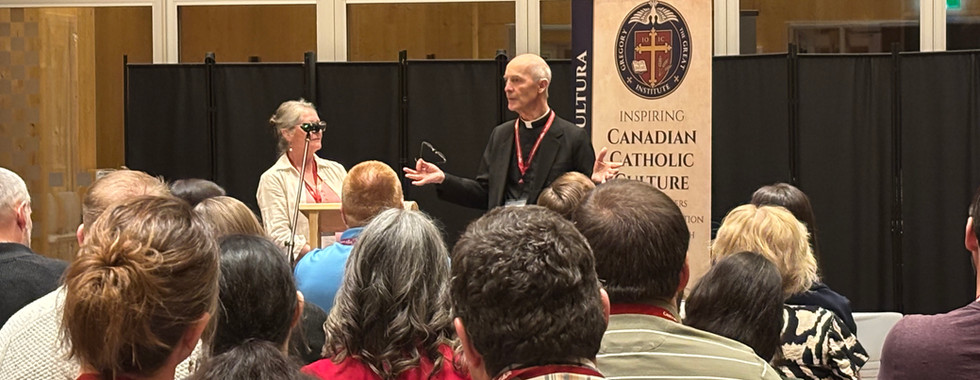
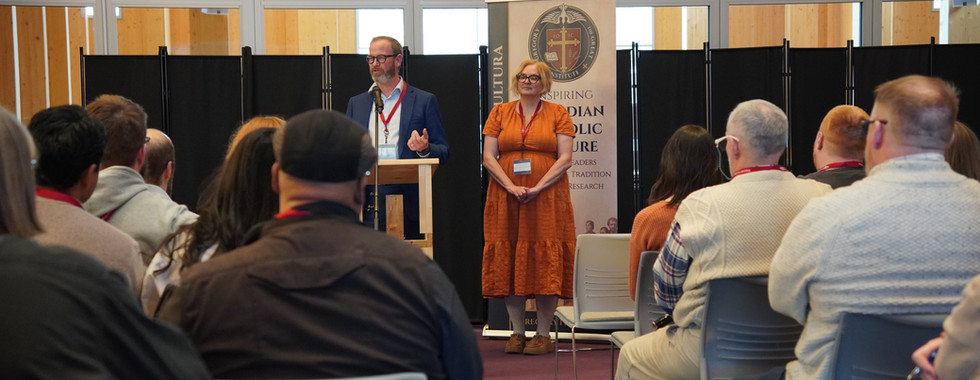
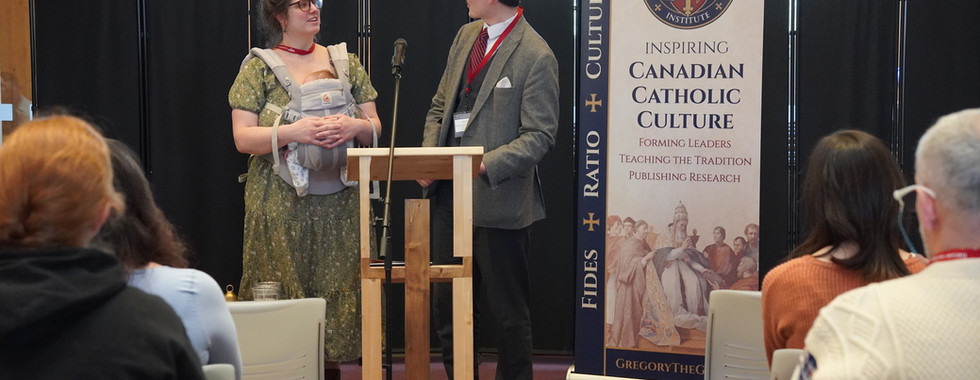
I say this for two reasons. First, it was clear from the variety of couples who told their stories
throughout the retreat that there is no one-size-fits-all model of a happy and healthy marriage or of raising children who embrace and live out the Catholic faith in their adult lives. Some families with excellent Catholic marriages wind up with their children leaving the faith in adulthood (or earlier), while other families with really unhealthy or broken marriages result in children who embrace the faith and live it out intentionally throughout their lives.
Nevertheless, a successful marriage—one that leads to the sanctification and salvation of both the spouses and the children—is like a virtue or holiness. As a virtue is lived differently in every person but has something common in every case, or as holiness looks different in every saint but is a living out of the Gospel in every case, so does a successful marriage take on a great variety of individual expressions while having certain common principles.
My second reason for affirming that marriage is a mystery is that despite a lifetime of
experiencing marriages (from the outside and then the inside) and years of studying the
sacrament theologically, I came back from the retreat not only with fresh reminders but with new insights into those principles that make a marriage successful.
One principle of a successful marriage can be summed up in the phrase, “it’s all about
relationships.” The relationships in question here are those of the spouses to each other and of the parents to their children. With regard to the former, the MacKenzies shared the importance of “Christ-centred Socratic dialogue.” Listening deeply to one’s spouse, asking questions, and repeating back what is heard to confirm understanding not only allows the listener to come to know his spouse more fully but allows the speaker to feel all the more loved. St. Augustine repeats time and time again, “one cannot love what he does not know.” The love of spouses is increased as they come to know each other more fully throughout their marriage; studying one’s spouse should not be restricted to the courtship or engagement period. Several couples indicated various difficulties earlier in marriage on account of an insufficient knowledge of the other.
It is no doubt that this same practice of continuously getting to know the other can be applied also to one’s children as a means of strengthening those relationships. This too was brought out by several couples: a strong relationship between the children and their parents is a reliable way of ensuring that they keep the faith into their later years. One of the most striking moments of the retreat was when the Nosters were asked the most significant thing they did to ensure their children kept the faith. Without a moment’s hesitation, both responded immediately and together with a single word: “apologise.” Humility and contrition are two key elements of maintaining and restoring strong family relationships.
A second principle is found in the maxim, “more is caught than taught.” An essential part of a successful marriage is passing on the faith to our children. When children see and experience the faith lived out regularly, they are far more likely to keep it alive when they go out on their own. This means that families need to have a clear Catholic identity fostered by a living Catholic culture. The daily life of a Catholic family cannot be disjointed from Sunday Mass; it must be visibly different from other families who do not share the faith. The Nosters pointed out the importance of family traditions and the Toppings provided a long list of such traditions that they share with their children.
Ryan Topping noted that “culture” is derived from the Latin word for cultivation, which implies that a Catholic culture in the home is an intentional ordering of daily life to make it flourish in beauty and good fruits. Culture is the exact opposite of living “by accident” or going “wherever the wind blows.” Here the Nosters also spoke of determining one’s family mission and charism; having a clear mission and understanding the gifts proper to one’s family are fundamental for any intentional ordering of family life. Yet the Latin verb whence “culture” is derived also means to worship, whence we derive the word “cult.” The implication here is that an essential part of Catholic culture is the liturgy. The Toppings brought this out in their list of family practices, which follow the liturgical calendar and incorporate the liturgy of the hours. If a family’s daily life is intentionally ordered toward salvation by means of right Christian worship, the faith becomes embodied and children are sure to catch what is being passed on.
A third and final principle of successful marriages comes from Proverbs 27:17, “Iron sharpens iron, and one man sharpens another.” This principle was stated explicitly by both the Nosters and the Toppings but was present in what each of the couples shared. Community is vital if one is to cultivate a Catholic culture. Intentionally surrounding one’s family with other families who share the same goal is not simply about safeguarding the faith of our children but about growing and developing our own family customs. We practised this principle by attending the marriage retreat. There we were provided examples of what other families do to foster Catholic culture in their homes, and we were encouraged in our faith and in our mission.
This last principle was my key takeaway from the retreat. Whether we look to John Donne’s “No man is an island,” or the folk wisdom, “it takes a village to raise a child,” or to the book of Proverbs, it is clear that the individualism fostered by Liberalism is a false messiah. If we desire a successful marriage, we must be intentional in gathering a community around us to support, encourage, teach, and challenge us on the way. In the beginning, God noted, “It is not good that the man should be alone” (Gen 2:18). We are made for communion with God, but that communion is signified in marriage and realised in the Church, which is the spotless bride of Christ. “This is a great mystery,” says St. Paul, “and I mean in reference to Christ and the Church.”
Dr. Arron Debusschere lives in Edmonton with his wife, Christina, and their three children. Having recently completed his doctoral studies in theology, he teaches humanities at Holy House, Edmonton. Aaron and Christina keep a blog at www.theromanticcatholic.wordpress.com.








Comments